


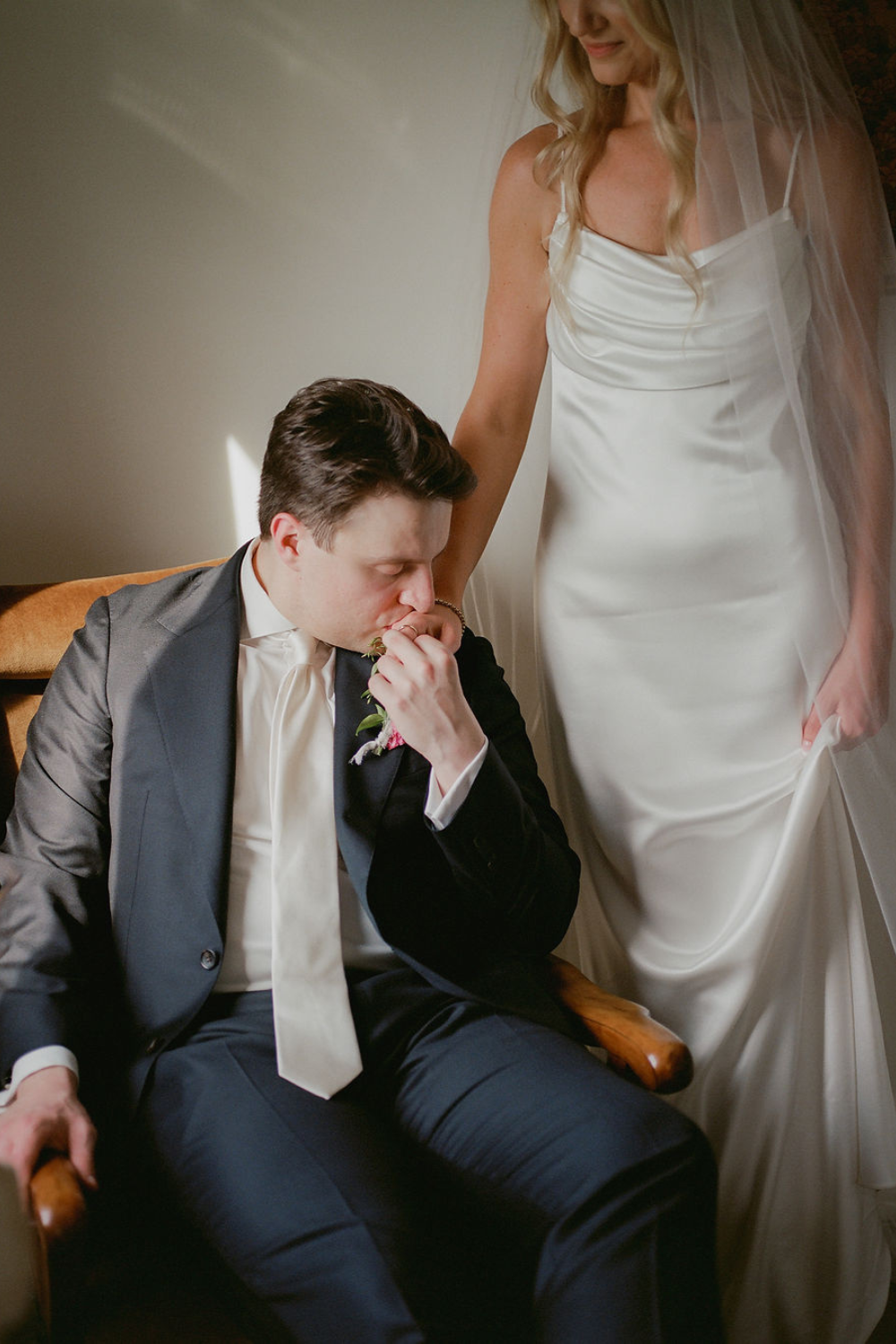
Should I hire a flat-fee or percentage-based wedding planner? When comparing a wedding planner’s fee structure in New Jersey, it’s worth looking beyond the number itself and understanding how that pricing model affects the advice you’re receiving. At Well-Dressed Events, we charge a transparent flat fee based on the scope and complexity of your wedding. We do that because we believe your planner’s compensation shouldn’t increase simply because you spend more money.
If you’re new here: we’re Well-Dressed Events, a full-service wedding planning company serving New York and New Jersey. We plan weddings for busy, high-achieving couples who want to be involved in the fun parts without managing the logistics.
The way your planner gets paid matters
Most couples understand that wedding planners charge differently, but they don’t always think about what those differences mean once planning begins.
Percentage-based planning fees are typically calculated as a percentage of the overall wedding budget. On paper, the model can seem straightforward. As the size of the event grows, the planner’s fee grows alongside it.
The issue is that the planner’s compensation is directly tied to how much the client spends.
If a planner earns a percentage of your total budget, a more expensive wedding can mean a larger paycheck. Choose the $30,000 florist instead of the $15,000 florist, and depending on the fee structure, the planner may earn more money despite managing a similar amount of logistical work.
That doesn’t mean every planner who charges this way is intentionally encouraging clients to spend more. But the incentive exists, and we think it’s worth being honest about that.
Our clients work in finance, corporate law, tech, and other industries where understanding incentives is part of everyday decision-making. They know that compensation structures influence behavior, even when everyone involved has good intentions.
We think wedding planning should be held to the same standard of transparency.



Our advice shouldn’t get more expensive when your choices do
At Well-Dressed Events, our fee is based on what it will actually take to plan and produce your wedding. The scope of the celebration matters. The complexity matters. The level of support you need matters.
Whether you choose one florist or another simply because one costs more shouldn’t change what we earn.
That separation allows us to give advice based on what we genuinely think is right for your wedding. If we believe a particular vendor is worth the investment, we’ll tell you why. If we think there is an opportunity to spend less without sacrificing something you care about, we’ll tell you that too.
Our goal isn’t to maximize your budget. It’s to help you use it intentionally.
That distinction matters more than it might seem at the beginning of the planning process. Wedding budgets involve hundreds of decisions, and those decisions add up quickly. You should be able to ask your planner, “Is this worth it?” without wondering whether their answer affects their own compensation.
Building a wedding budget starts with understanding where your money is going, but your priorities should ultimately determine where you choose to invest. If you need help building your wedding budget, explore this online free planner.
A flat fee gives you a number you can actually plan around
One of the benefits of a flat-fee wedding planner fee structure is predictability.
You know what you’re paying us for our services from the beginning. Our compensation isn’t quietly increasing alongside your vendor invoices, and you don’t have to worry that a change in your overall wedding budget will automatically change what you owe us.
That doesn’t mean every wedding costs the same to plan. A 75-person dinner at a restaurant and a multi-day wedding weekend with a tented reception are different productions with different levels of coordination and complexity. That’s why our pricing reflects the scope of the work involved.
But once we’ve established that scope, our role is to manage the production well, not to find ways to make it more expensive.
We negotiate to protect your budget, not grow our payout
One of the most practical differences between pricing models shows up when it’s time to negotiate.
We want to help our clients make smart financial decisions, whether that means finding a vendor whose proposal better fits the budget, identifying where a quote can be adjusted, or determining which upgrades are actually worth the investment.
Under our model, saving you money doesn’t reduce our fee.
That’s important to us because we never want our interests to be competing with yours. If we can negotiate a better outcome for you, that’s simply part of doing our job well.
We’ve written before about the relationship between taste, priorities, and wedding spending in Your Wedding Taste Has a Price Tag. Here’s How to Reconcile the Two. A realistic budget doesn’t mean choosing the cheapest option in every category. It means understanding what matters most to you and spending accordingly.
Our fee structure supports that philosophy because we’re not financially rewarded for pushing your priorities in a more expensive direction.
The cheapest option isn’t always the best value
To be clear, this isn’t an argument that every couple should choose the least expensive planner or vendor.
Price is only one part of the decision.
Experience, communication, relationships, judgment, and the level of service you receive all matter. A planner who costs more may be the right fit for a more complex event. A vendor who costs more may deliver something genuinely different from a less expensive alternative.
The question is whether the advice you’re receiving is aligned with your goals.
A good planner should be able to explain why they recommend an investment without needing that investment to increase their own compensation.
That’s the standard we hold ourselves to.
Ask how your planner’s incentives work
Before hiring a wedding planner, ask how they charge and what causes that fee to change.
A percentage-based model may work for some couples and some planning firms. We’re not suggesting that every planner who uses one is giving bad advice. But we do believe couples deserve to understand the structure before they sign a contract.
Ask whether the planner’s fee increases when your budget increases. Ask how they handle vendor negotiations. Ask what happens if you decide to spend more in one category or less in another.
Those conversations aren’t awkward, they’re part of hiring someone to help manage a significant financial investment.
The right planner should be comfortable answering them.
Your planner should be on the same side of the table
At the end of the day, we want our clients to know exactly how we make money and why we’re recommending what we’re recommending.
Our job is to bring experience and perspective to the decisions you’re making, not to spend your budget for you. We can recommend a florist, negotiate a proposal, flag an unnecessary upgrade, or tell you when we think something is genuinely worth the investment. But our advice should always be rooted in your priorities, not our payout.
That’s why we charge a flat fee.
Because when we’re sitting on your side of the table, we think it should be obvious that we’re actually sitting there.
Ready to work with a planning team whose advice is built around your wedding, not a percentage of your spending? Book a call with us. We’ll talk through what you’re planning, what kind of support you need, and whether we’re the right fit. Honest, helpful, and never pushy.






Comments +