


Before booking a tented wedding, understand that East Coast tented wedding logistics involve much more than choosing a beautiful tent. Weather, power, flooring, bathrooms, catering, parking, and guest access all become part of the wedding when the venue does not have a permanent structure.
We love a sailcloth tent. We also refuse to plan a wedding around a Pinterest photo taken on the one perfect Saturday in September.
If you’re new here: we’re Well-Dressed Events, a full-service wedding planning company serving New York and New Jersey. We plan weddings for busy, high-achieving couples who want to be involved in the fun parts without managing the logistics.
A tented wedding can be incredible. It can also mean your caterer is cooking in a temporary structure, your guests are walking across a field to a bathroom trailer, and everyone is suddenly very interested in the weather forecast.
What does a tented wedding actually require?
A tent is not a venue. It is one component of a temporary event site.
Depending on the property, you may need:
- Tent and structural anchoring
- Flooring
- Power and generators
- Restroom trailers
- Catering and kitchen tents
- Lighting
- Heating or cooling
- Parking and transportation
- Guest pathways
- Trash removal
When you book a ballroom or established estate, much of this infrastructure already exists. With a raw-space tented wedding, you may have to create it. Tented weddings also come with permitting and code requirements that depend on the size, location, anchoring, season, and setup of the structure. New Jersey’s official tent permitting guidelines outline the requirements here.
That is why we treat a field differently from a traditional wedding venue. The field is the setting. We still have to build the event.
What happens when it rains?
This is the question we wish every couple asked before falling in love with the photos.
If the tent is not fully floored and it rains, you are dealing with mud. Guests still need to walk through it. Vendors still need to load in. Your caterer still needs to get food into the tent.
And flooring only solves part of the problem. Tents require openings for access and egress, which means you cannot simply seal the structure shut when the weather turns.
Even with a beautiful tent and flooring, sideways rain can still become part of the evening.
That is why a tented wedding needs a real weather plan, not a sentence in the contract that says “weather permitting.”

What happens when the weather changes?
The East Coast does not owe your wedding a perfect forecast.
We have planned tented weddings where rain and 20 mph winds arrived despite a clear forecast earlier in the day. We lowered tent walls, managed water coming into the structure, maintained the required opening, and kept the event moving.
The couple stayed focused on enjoying their wedding.
That is what we mean when we say we do not plan weddings based on stagnant Pinterest photos. We plan for the wedding that might actually happen.
What about catering and bathrooms?
A luxury meal still needs somewhere to be prepared.
At a raw-space wedding, your caterer may be cooking inside a temporary kitchen tent. That means thinking through power, refrigeration, water, prep space, trash, vendor access, and timing.
The same goes for bathrooms. Luxury restroom trailers can be beautiful and comfortable. They are still trailers.
Your guests may need to walk outside to reach them. If it rains, that means walking through the rain. If the property is large, that walk may not be particularly short.
These details are not glamorous. They are exactly what makes a tented wedding work.
Is a tented wedding right for every couple?
No. And we would rather tell you that before you book the field.
If the idea of rain changing your plans makes you genuinely miserable, a tented wedding may not be the right fit.
If you do not want to think about generators, restroom trailers, flooring, weather plans, or temporary kitchens, there are venues where those things already exist.
A tented wedding gives you enormous creative freedom, but you are trading some convenience for control.
For couples who love building an entire environment from the ground up, that trade can be completely worth it.
Why does a tented wedding need full-service planning?
A tented wedding has more moving parts because the infrastructure has to be created and coordinated rather than inherited from the venue.
That is why we approach these weddings more like productions than traditional venue-based celebrations.
We coordinate the tent company with the caterer. We think through power before the florist arrives. We consider guest pathways before the rain starts. We build contingency plans before we need them.
This is also why raw-space wedding planning and day-of coordination are very different things. The decisions need to happen long before the wedding week.
The Pinterest photo is not the whole wedding
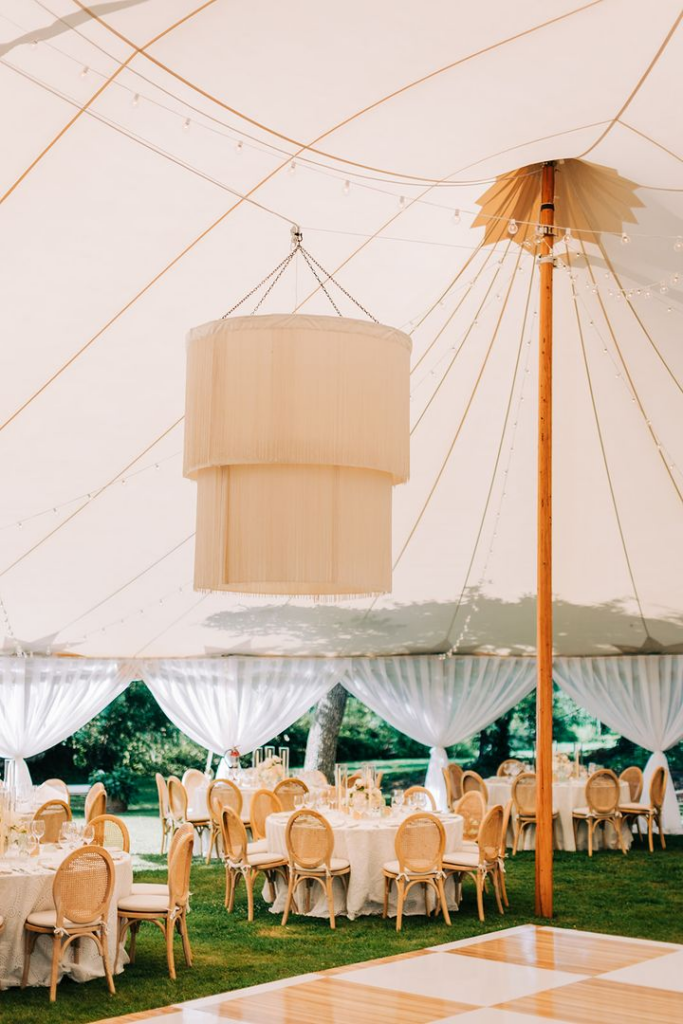
A sailcloth tent on a green field at golden hour is beautiful.
We love that photo too.
But the photo does not show the generator behind the tent, the bathroom trailer, the catering tent, or the flooring underneath the tables.
That does not make the wedding less beautiful. It means the beauty depends on a lot of infrastructure you cannot see.
At Well-Dressed Events, we want our couples to understand all of it before they commit to a tented wedding. We will absolutely help you create the beautiful version. We just want you to know what has to happen behind the scenes to make it possible.
A tented wedding is not difficult because the tent is difficult. It is difficult because you are building the venue around the wedding.
If you are considering a tented wedding in New Jersey or the Hudson Valley, we can help you understand the site, infrastructure, weather contingencies, and production decisions before you commit.
Ready to stop guessing and start planning? Book a call with Well-Dressed Events. We’ll talk through where things stand, what you’re hoping for, and whether we’re the right fit. Honest, helpful, and never pushy. Book a call here



Comments +